


There are 18 major Rites in the Catholic Church, with 18 different ways to celebrate the Holy Sacrifice of the Mass, of which the Latin Rite is one. We should keep in mind that the Mass is essentially one and the same Apostolic Liturgy in all valid Rites. Aramaic was the common language of many Christians in the first four centuries of the Catholic Church. Syriac was one dialect of Aramaic and was used especially in the ancient Christian city of Edessa, at the same location on the Daysan River as the modern city of Urfa in Turkey. Edessa became a major Christian center of Greek and Syriac theological and philosophical thought but fell under Arab control in the middle of the 7th century. From Edessa, the Christian evangelization of Armenia in the 3rd century was very successful, and Armenia became the first Christian nation in 301. The Armenian alphabet was then invented at Edessa at the beginning of the 5th century.
The Catholic Church grew through the language of Syriac and spread all the way to Persia and India, and even to parts of China, as did the ancient syncretistic religion of Manichaeism. The Armenian Rite in the 4th century developed under the influence of the Syriac Rite. In the East, the territory of the ancient Syriac Rite was vast. The Syriac Orthodox Church, the Syriac Catholic Church, the Maronite Catholic Church, the Chaldean Catholic Church, the Assyrian Church of the East, the Chaldean Syrian Church, the Syro-Malabar Catholic Church, the Syro-Malankara Catholic Church, and the Malankara Orthodox Church, among others, are all rooted in the same ancient Syriac Apostolic Tradition. The Syriac Christians were very interested in Greek culture and translated much of Greek literature into Syriac.
An academic requirement for the study of Greek Patristics to this day is to learn to read Syriac as well as Greek. Syriac remained the language of most Christians in the East until the rise of Islam in the 6th century, when Arabic became the vernacular. The success of Manichaeism and then Islam in the East led directly to the decline of Syriac Christianity. The early Syriac Rite was geographically much larger than both the Latin and Byzantine Rites, which naturally makes us wonder whether something similar could ever happen to our own Latin Rite in the West due to the ongoing success of the secularization of our culture. Could we culturally go into decline as a Rite? Yes, in fact we already have, but we know by faith that the Catholic Church as a whole is protected by Christ and will never completely die.
Saint Maron was a hermit monk who lived in the Taurus Mountains north of the Christian city of Antioch in Syria in the 4th century. He was a friend of St John Chrysostom, with whom he studied at Antioch. He founded a school of monks which served the Catholic faithful in the Syriac Tradition and eventually became a Rite within the Church. At the time of the Arabic invasion in the 6th century, the Maronite monks were defending Catholic doctrine against Nestorianism, which teaches that Jesus is a separate person from the Eternal Word and has a merely human nature. The Council of Chalcedon in 451 had condemned both the Nestorian and the Monophysite heresies. Nestorianism emphasizes the humanity of Jesus to the exclusion of his divinity and posits two distinct persons, one human and the other divine, having separate natures that are united accidently, while Monophysitism emphasizes the divinity of Jesus and maintains that he has only one nature, either essentially divine or a synthesis of divine and human attributes.
The Confession of Chalcedon provides a very clear statement on the human and the divine natures of Christ, hypostatically united in his divine Person: “We, then, following the holy Fathers, all with one consent, teach people to confess one and the same Son, our Lord Jesus Christ, the same perfect in Godhead and also perfect in manhood, truly God and truly man, of a rational soul and body, consubstantial with the Father according to the Godhead, and consubstantial with us according to the manhood, in all things like unto us, but without sin, begotten before all ages of the Father according to the Godhead, and in these latter days, for us and for our salvation, born of the Virgin Mary, the Mother of God, according to the manhood, one and the same Christ, Son, Lord, only begotten, to be acknowledged in two natures, unconfusedly, unchangeably, indivisibly, inseparably (ἐν δύο φύσεσιν ἀσυγχύτως, ἀτρέπτως, ἀδιαιρέτως, ἀχωρίστως – in duabus naturis inconfuse, immutabiliter, indivise, inseparabiliter), the distinction of natures being by no means taken away by the union, but rather the properties of each nature being preserved, and concurring in one Person (πρόσωπον – prosopon) and one Subsistence (ὑπὸστασιν – hypostasis), not parted or divided into two persons, but one and the same Son and only begotten God (μονογενῆ Θεόν), the Word, the Lord Jesus Christ, as the prophets from the beginning [have declared] concerning him, and the Lord Jesus Christ himself has taught us, and the Creed of the holy Fathers has handed down to us.”
Nestorianism is the antithesis of Monophysitism and had a significant influence on Mohammed and Islam. The Quranic name for Jesus, “Isa,” for example, probably derives from the earlier Nestorian Syriac name for Jesus, “Isho.” As Hilaire Belloc often pointed out, Islam originated in a Christian heresy. One virtue of Islam was to preserve monotheism in the face of paganism. The Maronites taught the Catholic truth about Christ and contributed to the preservation of the Apostolic Tradition in Syria, but they were oppressed by both the Monophysites and the Muslims. Many were martyred, but some compromised and were assimilated. The faithful withdrew into the mountains of Lebanon and were cut off from Rome until the Crusades, which they regarded as a liberation. Please note that modern cinematic dramas set in the time of the Crusades are often fictional even when they contain historical persons. In the 2nd Crusade, for example, Balian of Ibelin was a very devout Christian nobleman of the Latin Kingdom of Jerusalem, not some kind of secular agnostic hero. After the 2nd Crusade, some crusaders settled on Mount Carmel as hermits and became the founders of the Carmelite Order. In 1182, the entire Maronite Church reaffirmed their full communion and obedience to the Bishop of Rome. They were all eventually overrun by the Muslims, and those Christian communities that did not escape to Europe lived under the Ottoman Empire from the 16th to the 19th centuries. Thousands of Maronites in the Near East were massacred in 1860, which led the French to intervene and take control of Lebanon and southern Syria until the 1940s.
The Armenians have had a long struggle with the Muslims as well. Armenian Christians are divided by various doctrines about Jesus that include Monophysitism, Miaphysitism, and Chalcedonianisn. Miaphysitism holds that Jesus is both fully divine and fully human in one essentially composite nature. The Armenian monk St Gregory of Narek (950-1003) was declared a Doctor of the Church by Pope Francis in 2015. During World War II from 1915 to 1917 about one million Armenian Christians were targeted and exterminated by Ottomans in Turkey, which is regarded as the first major holocaust of the 20th century (the actual number of deaths is disputable, but the fact of the deportation and violence is undeniable). Many other such holocausts were to follow. Adolf Hitler, for example, imitated the pattern of extermination and used it against millions of Jews in Europe, calling it “The Armenian Solution.” We should not equate the various acts of violence carried out against different peoples in different contexts and circumstances, and we cannot justly implicate whole populations for violence that is typically carried out only by a minority and is often regretted by the majority, but sadly we must admit that the human tendency toward violence and oppression often triumphs over religious ideals and principles of peace and fraternity.
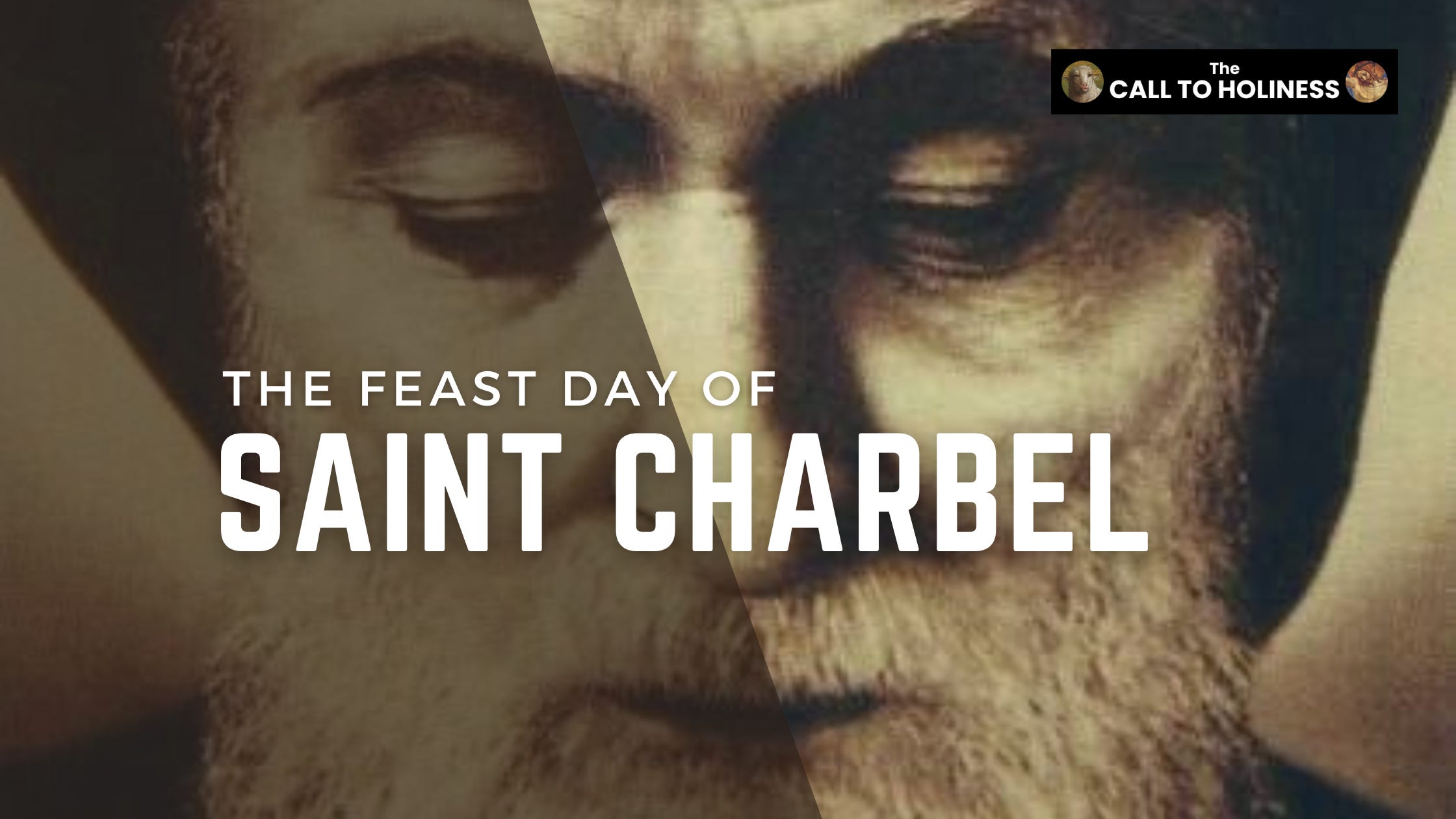
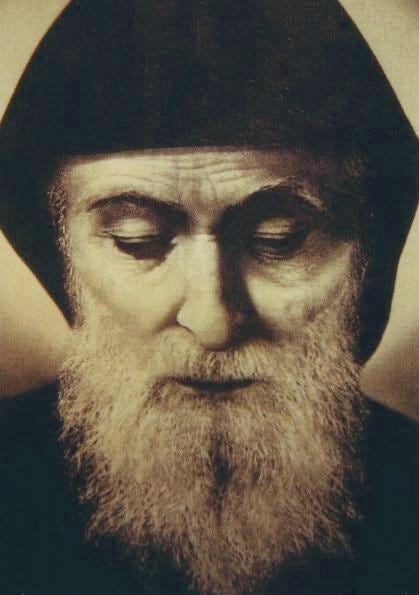
The Aramaic Maronite Antiochian Church is indeed a living branch of the Catholic Church and has always been intimately connected with the trunk, who is Christ the Lord. In 1828, in the region of Mount Lebanon of Jbeil in Annaya, some Maronite monks began building a monastery in honor of St Maron. That same year, Joseph Zaroun Maklouf was born and baptized in the Maronite Rite in the nearby Lebanese village of Beka-Kafra. When he was only three years old, his father died, and he was raised by an uncle. In 1841, the nearby monks completed the monastery church. At the age of 23, Joseph entered the Maronite monastery of Our Lady of Mayfouk, where he became a novice. After two years in the novitiate, he was sent in 1853 to the monastery and church of St Maron in Annaya, where he professed the monastic vows of poverty, chastity and obedience, receiving the name Charbel in honor of a 2nd-century Christian martyr from Edessa. He was then transferred to the monastery of Kfeifan, where he studied philosophy and theology and was ordained to the priesthood in 1859, after which he was sent back to the monastery of St Maron for the rest of his life. Soon there was the terrible massacre of Maronite Christians, after which Lebanon came under the control of the French.
Charbel lived a very ascetical life of self-denial, and in 1875 he began a strict observance of solitude and silence as a hermit monk, as St Maron and many other Maronite monks had done, but his reputation for holiness prompted many people to seek him out to receive his blessing and to be remembered in his prayers. He followed a strict daily fast and spent many hours in adoration of the Blessed Sacrament. Whenever his superiors asked him to administer the sacraments in nearby villages, he did so gladly. He died on Christmas Eve in 1898. Christians and non-Christians alike soon made his tomb a place of pilgrimage. People from many different religions and cultures have received miraculous cures at his tomb. St Paul VI beatified him in 1965 and canonized him in 1977.
After Charbel was beatified, the Maronite monks began to build a new church and facilities to receive the even greater number of people coming daily to visit his tomb and to seek his intercession. The new church was named St Charbel. Thanks to St Charbel, St Maron’s monastery in Annaya became an international shrine where thousands of people of various cultures and backgrounds made pilgrimages and sent letters to petition the assistance of the Maronite Saints. The monastery website is available at https://saintcharbel.com/ and contains some history with pictures and accounts of miracles.
Evil is always a corruption of something good. When we focus on error and evil to the exclusion of what is true and good, we often fall into error and evil ourselves in a misguided self-righteous attempt to preserve what is true and good and oppose what is false and evil. Even the best of motives can produce very evil consequences, especially when people fall into the tragic moral error of thinking that the end justifies the means. Faith and reason together must always insist that every human person by nature has inalienable moral rights that are authored and sanctioned by God against our human tendency toward violence and oppression. May the prayers of St Charbel obtain the grace of lasting peace in the Near East between all those who worship the God of Abraham, Isaac, and Jacob.
About Deacon Tracy Jamison, OCDS, PhD
Deacon Tracy Jamison was raised in a Christian family as the son of a Scotch-Irish evangelical minister in the Campbellite tradition. As an undergraduate he majored in Biblical and Ancient Near Eastern Studies at Cincinnati Christian University, where his parents had been educated. At this institution he met Joyce, who was completing a degree in Church Music, and after graduation they entered the covenant of Christian marriage in 1988. Through the study of philosophy and the writings of the Early Church Fathers, Tracy was received into the full communion of the Catholic Church in 1992. Under the influence of the theological writings of St. John Paul II he began to study the works of St. Teresa of Avila and St. John of the Cross and entered formation as a Secular Carmelite of the Teresian Reform. In 1999 he completed the doctoral program in Philosophy at the University of Cincinnati, and in 2002 he made his definitive profession as a Secular Carmelite. In 2010 he was ordained as a permanent deacon of the Archdiocese of Cincinnati. Currently he is an associate professor of philosophy at Mount St. Mary’s Seminary of the West.
© 2026, Lawain McNeil, Mission Surrender, LLC.