


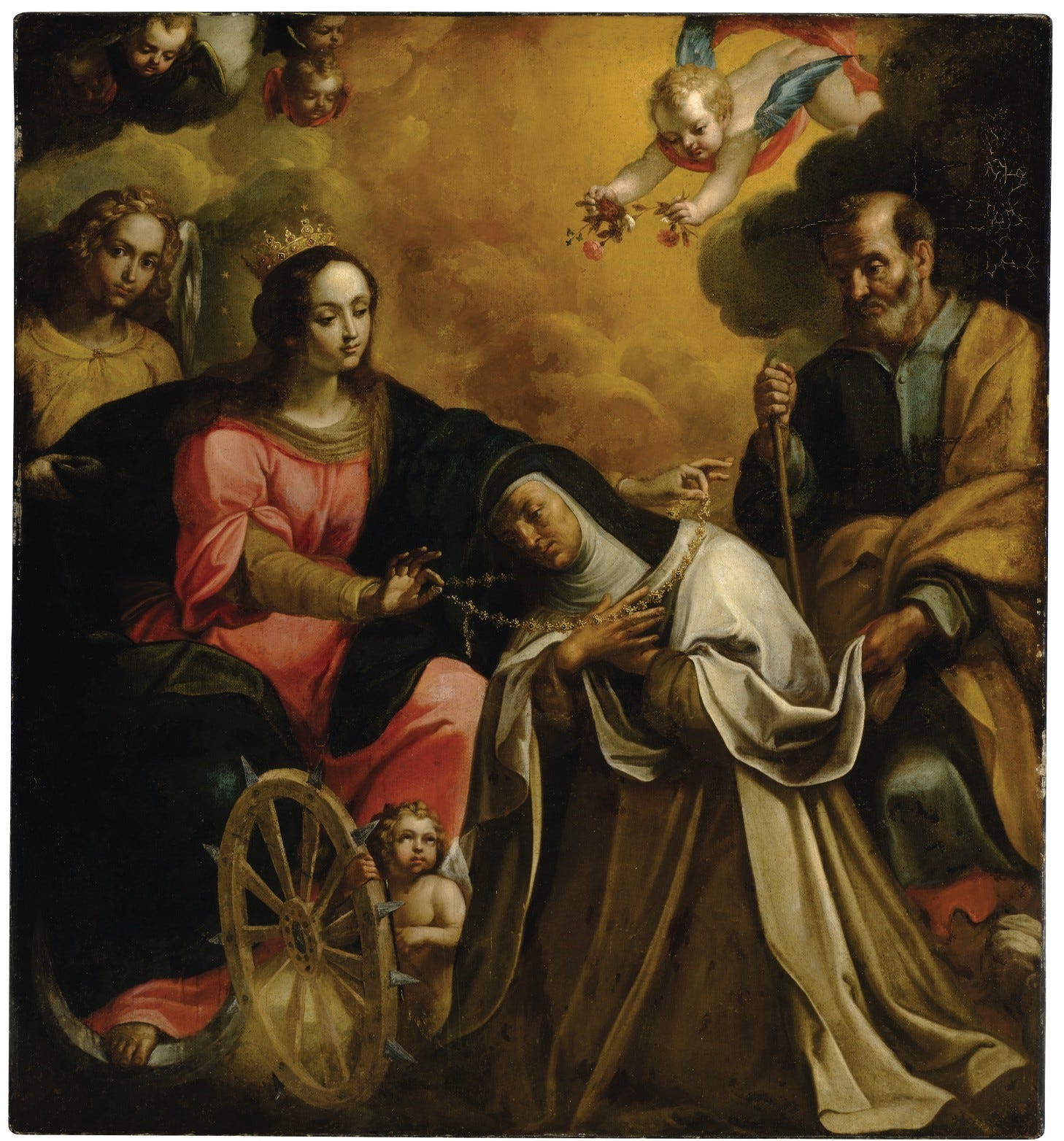
“Does God offer spiritual marriage, like the grace of faith itself, to every human soul?” The answer to this question requires a certain level of spiritual maturity and some reflection on the spiritual meaning of human sexuality and traditional marriage. The Christian doctrines that Christ is God and that the Church as a whole is the Bride of Christ and the universal sacrament of salvation do indeed entail that each and every human soul is called to be a bride of Christ. Incorporation into the Church through sacramental Baptism or the baptism of desire or martyrdom is not a loss of our souls but a spousal union of our souls with the divine life of the Trinity. The Catechism of the Catholic Church explicitly states that “Baptism, the entry into the People of God, is a nuptial mystery; it is so to speak the nuptial bath which precedes the wedding feast, the Eucharist” (§1617).
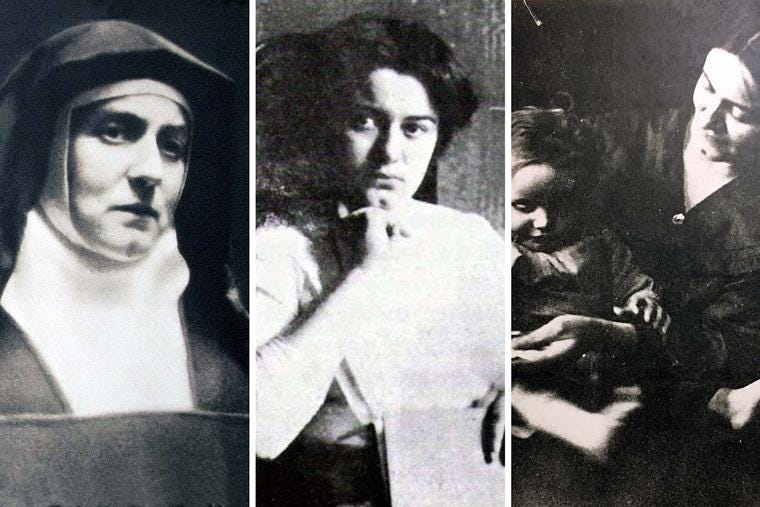
Many pagans such as the ancient Neoplatonists pursue and promote a nuptial union between the human soul and God based on natural reason. Many Christian mystics likewise affirm that God is the Bridegroom of the human soul, but the doctrine is based on the grace of faith and infused contemplation, not natural reason. The traditional Judeo-Christian interpretation of The Song of Songs understands it as a dialogue of love between a human soul and God in the context of covenantal faith and spiritual marriage. This is how Origen and the Cappadocian Fathers understand it. St Teresa of Avila and St John of the Cross interpret it in the same way. All the Doctors of the Church, including St Gregory of Narek, speak of each human soul in the feminine as a bride of Christ. St Bernard of Clairvaux, for example, says that if the human soul loves Christ with her whole being, then “she possesses the marriage bond with him perfectly.” St Gertrude the Great affirms the same mystical doctrine. St Teresa Benedicta of the Cross (Edith Stein) explains that this identity is not merely a metaphor or resemblance: the relationship between Christ and the human soul is to be understood as nothing less than the archetype of all nuptial relationships (The Science of the Cross, Chapter 19 “The Bridal Song”).
Every human soul is called to be a bride of Christ by its very nature. As puzzling as this doctrine may seem, it is one of the fundamental analogies that make Christian anthropology a unique synthesis of faith and reason. In the act-potency metaphysics of Aristotle, the soul is simultaneously in act in relation to the body and in potency in relation to the Unmoved Mover. The soul is the substantial form of the living and moving body, and whatever is moved is moved by another. The Catholic Church affirms the hylomorphic insights of Aristotle regarding the nature of the soul and proposes that in relation to the Pure Act who is God the Father, God the Son, and God the Holy Spirit, all souls are spiritually female by their very nature, even though they are also consubstantial with a material body which is physically either male or female. The soul of a material substance is not identical to its essence. The essence includes the body. Physical truths analogically reflect spiritual truths. As the female body is physically receptive to the male body by its very nature, so also the human soul is spiritually receptive to Christ by its very nature. As the human sexual faculty is by nature inherently irreducible either to the female organ alone or to the male organ alone, so also the spiritual faculty of grace is inherently irreducible either to human nature alone or to divine nature alone. As male and female are contrary perfections and inconceivable without each other, so also Creator and creature are contrary perfections and inconceivable without each other, though of course God can exist without creating. God is Pure Act and Pure Existence by his very nature, but in the act of creation he is also the Uncaused Cause of all creaturely perfections, and he has also assumed a human nature and given us his Spirit in order to redeem and sanctify us.
Christian doctrine has always implicitly and necessarily taught that every human soul is called to be a bride of Christ by its very nature. The mentality characteristic of modernism is unable to grasp such a doctrine, but no true Christian can dispense with it. The truth is that nothing is ontologically self-moved or self-caused. Self-motion in living things, including humans, is always relative to the end being sought; it is not absolute. The human soul itself is neither divine nor unmoved by nature. It exists contingently and has a Cause. It needs grace as its soul-food, and it needs Christ as its Soul-Mate. The human person is by nature a potency in two fundamental dimensions to receive and exercise natural and supernatural acts. The whole human person is not identical to its soul or to its body, even though it is simultaneously both wholly a soul and wholly a body. Soul and body are consubstantial, in accord with the Neoplatonist doctrine of holenmerism, of which most people nowadays have never heard. In the vertical dimension, our persons are actualized and informed ontologically by existence, essence, subsistence, and grace, and our souls are actualized and informed cognitively by the sensible and intelligible forms of the material objects we perceive. Natural human knowledge is inherently a union of complementary opposites, and so is supernatural knowledge. In the horizontal dimension, we are actualized and cultivated socially and inter-subjectively by the mind and heart of a human culture but also potentially by the Sacred Mind and Heart of Christ and his Church. Spiritually the human soul is therefore analogous to an ovum or egg. It cannot be fruitful or actualize its supernatural potential apart from Christ.
Human marriage is likewise a physical union of complementary physical opposites. Spiritual marriage is analogously and inherently a mystical union of complementary spiritual opposites. In the first chapter of the Seventh Dwelling Places of The Interior Castle, St Teresa of Avila explicitly defines spiritual marriage as an infused but ineffable form of intellectual knowledge of all three Persons of the Most Holy Trinity present in the human soul. This enlightenment is offered to the faithful through Communion with the Sacred Humanity of Christ. Christ is the Bridegroom of the human soul and is a Hypostatic Union of complementary opposites in his divine Person. Anyone who rejects grace and says “I don’t need God to be the Bridegroom of my soul” is saying “I am naturally self-fulfilled and divine and the source of my own goodness and happiness.” Such a person has fallen into a delusion and will make himself miserable. The truth is that in the order of grace as well as the order of nature the human soul is a spiritual emptiness that only God can spiritually fill and make fruitful. It is in potency to God, and nothing else can actualize it and make it virtuous and holy. If we reject God, then we are trying to find fulfillment in creatures like ourselves, rather than in the Person who is Goodness itself and is the complementary opposite of our souls. Because God became man in Christ, to reject Christ is to place our souls in relation to something that cannot satisfy them, either ourselves or another. To reject Christ is to accept self-actualization and self-causation and to land ourselves in a fundamental confusion and contradiction.
In Christianity, the female is exalted. Catholicism proclaims that the most holy human person is the Blessed Virgin Mary, and it protects the female consecrated religious state of life as the most perfect form of marriage to Christ. Accepting Christ as the divine Soul-Mate by the grace of faith is typically easier for women than for men. Christianity is often accused of being “a woman’s religion” or “a religion for sissies.” Nietzsche exemplifies this attitude and says that if a man must have a religion, he should choose Islam instead. Nietzsche thinks that Islam is a man’s religion, “a religion for men.” It is true that Islam is a Christian heresy that in its more fundamentalist expression tends to negate and suppress that which is female. Nietzsche and Islam both reject Christ as the divine Soul-Mate, but for very different reasons. Sufi Islamic mysticism with its perennial emphasis on spiritual union with God through love recognizes the analogy of the human soul to the female, but it rejects the incarnation of God in Christ. When the noble project to make Aristotelian philosophy compatible with the Qur’an waned, theological voluntarism was adopted by much of Islam, just as it was later accepted by many Protestants and modern deists. There is a modern fideistic temptation within Western religions to de-Hellenize themselves and thus to embrace voluntarism and individualism. Traditional Hellenized religions are then typically regarded as morally impure, doctrinally corrupted by paganism, and perversely effeminate. The accusation is unjust and fallacious, but unfortunately it still convinces many men to forsake religion. The irony is that succumbing to the fear of being thought unmanly is itself unmanly. Real men defend their faith. So do real women. Many men and women nowadays are confused and insecure in their sexual identity. The modern secular world, not the Catholic Church, has undermined sexual identity and created that social problem.
All such attacks on Hellenized Christianity are ad hominem fallacies. The vice is not in Christian doctrine or morality but in the minds of those who are desperate to find a reason to reject all or part of it. The divine deposit of faith and morals that we have received from Christ and his Apostles itself entails a robust classical metaphysics and moral philosophy. With the rejection of the real essentialism of Socrates, Plato, Aristotle, and Neoplatonists such as Plotinus, the distinction between nature and culture quickly collapses. Many people who possess a valid Christian Baptism also have a very modern and nominalist way of thinking and thus suffer from cognitive dissonance and lack of congruence. They tend to be suspicious, uncharitable, and willing to believe whatever negative suspicions happen to occur to them or get communicated to them, including unwarranted conspiracy theories about rampant immorality at the Vatican or in Catholic clergy in general, theories which for political reasons are often deliberately promoted by unreliable “LGBTQ” sources. They casually accuse Catholic pastors of being “in the closet” and effectively undermine clerical authority but seldom stop to consider that calumny done knowingly and deliberately is a mortal sin. They rationalize their own sins by the sins committed by members of the clergy, but all such reasonings are likewise fallacies.
There are sexual predators everywhere, like Cardinal McCarrick, but the rate of occurrence among Catholic clergy and Catholic seminaries is not significantly different from that of any other group of Christians, including Protestant clergy and Protestant seminaries. It is also not significantly different from the rate of occurrence among other religions and the population in general. The truth seems to make little difference to those who reject the magisterium of the Catholic bishops and the Pope and throw at them whatever falsehood might stick and make them look evil. Such conduct is itself evil, and it consists of acting viciously in making ridiculous claims and carrying out character assassinations at will. It is not significantly different from anti-Catholic witch-hunting techniques used by fundamentalists at various times in the history of the Church. Such Christians have fallen into pride and the error of subjectivism. They authorize their own suspicions and without any objective evidence assume that they are true. Such people have lost or never acquired the ability to reason clearly and cogently by means of objective criteria.
There is no such thing as a faithful Catholic who publicly sets himself against the authentic magisterium of his bishop or the Pope. The hermeneutic of suspicion toward Catholic moral doctrine originates in the same mentality that rationalizes sexual sins such as contraception, pornography, masturbation, adultery, fornication, and homosexual conduct, which the Church will never declare to be morally licit. The truth is that if any of these sins were excusable, then they all would be, which is exactly what the modern “enlightened” or “woke” mentality inconsistently proposes. Nowadays whenever someone has the audacity to speak against such sins, he immediately becomes a target of suspicion, and his motivations are misjudged. It is not difficult to imagine where this trend will end. In modern culture, it becomes necessary for faithful Christians to follow the old Muslim saying, “Never explain yourself to anyone, because your friends do not need it, and your enemies will not believe it.”
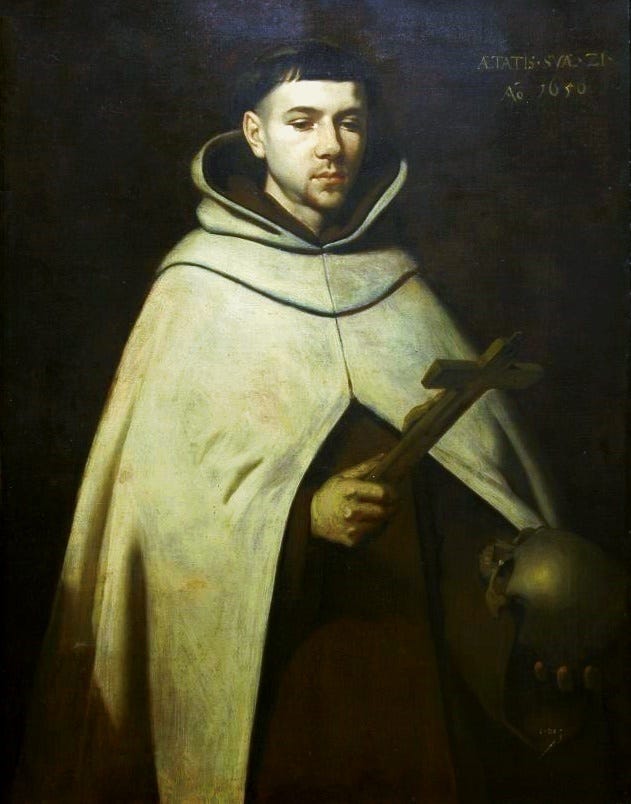
Catholic Christianity aligns itself with the natural moral law, and religion is the perennial solution to moral corruption and degradation, not the cause of it. Moral degradation comes from original sin, not from God or the Church. Catholic Christianity insists that the cultivated and horizontal dimension of the human person ought to be kept congruent with the natural and vertical dimension of the human person. Catholic Christianity affirms that the human soul is spiritually female to God and must accept Christ as its divine Bridegroom in order to have everlasting happiness. But this does not mean that Christian spirituality is essentially effeminate. Men and women have modally different psychologies and forms of subjectivity. Christ respects our natural identities and perfects us in the way that is appropriate for our nature. Everyone is called to be responsive and obedient to Christ, but responsiveness is modally different for men than it is for women. Christ helps females to be more feminine and helps males to be more masculine. Male persons are called to be faithful to God like Moses, Elijah, Joseph, John the Baptist, the Holy Apostles, Benedict, Francis, Dominic, John of the Cross, and other male Saints. Female persons are called to be faithful to God like Zipporah, Hannah, the Blessed Virgin Mary, Elizabeth, Mary Magdalene, Scholastica, Clare, Catherine, Teresa of Avila, and other female Saints.
How should we respond to modern commentators who analyze the writings of St John of the Cross, for example, and routinely accuse him of racism or homosexuality? We can easily find unjust accusations of this kind made against him in popular and scholarly media, but no one should be encouraged to read them. Such commentators typically argue that the contents of his writings reveal fundamentally racist and homosexualist attitudes and assumptions supposedly inherited from St Jerome, St Gregory the Great, St Bede the Venerable, and other allegedly biased translators of Sacred Scripture. St John of the Cross is also frequently found guilty of the cultural imperialism and genocide that informed the Spanish colonialism of his day. And all those who ignore moral imperfections as they engage in the veneration of such saints are typically regarded as complicit in their errors and guilty of prejudice and injustice.
The first thing to notice in such modern critiques of medieval Christian treatises is that if those critiques are sound, then they also apply to the content of the critiques themselves. If the writings of medieval authors implicitly contain prejudices and injustices, then so do the modern criticisms and condemnations of their works. One such bias is found in the modern tendency to ignore or underestimate the liberating and divinizing power of grace. If we conclude, for example, that the criticisms of the mystical theology of St John of the Cross are true, and that his works are the product of self-delusion, wishful thinking, and unconscious biases, then we must on pain of consistency also conclude that such criticisms themselves are likewise the product of self-delusion, wishful thinking, and unconscious biases, especially in their claims to superiority and greater perfection. Such criticisms might appear humbler and truer to the limitations of human nature but themselves be implicitly self-defeating, unsound, and unjust to the transforming power of divine grace.
The inherent problem with the hermeneutic of suspicion is that it typically assumes the very thing that it sets out to prove. If the testimony of John of the Cross and other mystics about the transforming and divinizing power of grace is true, then the only way that anyone can verify it is by believing it. The mere fact that the metaphorical and analogical language of the writings of the saints and mystics sometimes reflects the prejudices and assumptions of their socio-cultural contexts is never in itself a sufficient reason to doubt their testimony, any more than the mere suggestion that someone is suffering from self-delusion is ever in itself a sufficient reason to doubt any testimony. We must evaluate the credibility of testimony in accord with the signs and motives which have been made available to us for that purpose, and we must only doubt testimony when it is inherently doubtful according to the objective standards of such criteria. Furthermore, the theological basis for the perennial science of the Christian saints and mystics is supernatural faith, not human reason. Only insofar as we put away our personal doubts and suspicions and accept the testimonies of the Christian saints and mystics on their own authority do we truly have faith in them, either natural or supernatural.
A female consecrated religious person has a special vocation to be a bride of Christ in a manner that is higher, exclusive, and objectively more perfect than the universal vocation of every human soul to be a bride of Christ. Natural male and female responsivities are complementary opposites, as exemplified in St Joseph and the Blessed Virgin Mary and in every other truly married couple. Carmelites and other mendicant religious Orders live out this truth with different constitutions for friars and nuns, who have different ways of life and different spiritualities. Nuns do not live like friars, and friars do not live like nuns. Every human soul is called to a nuptial relationship with Christ, but the female human person spiritually relates to Christ in a manner that is different from the male human person’s relation to Christ, based on their objective identities and inseparable accidents. To be a human person is to be male or female, and to be a Christian is to be responsive to God like Joseph or Mary. As Patrick Kelly—the Supreme Knight of the Knights of Columbus—emphasized at his installation in 2021, the imitation of St Joseph calls men to be guardians of the family and of truth, and the imitation of the Blessed Virgin Mary calls women to be distributors of mercy and of charity.
Christ seeks to cultivate a personal friendship with everyone. Everyone except the Blessed Virgin Mary suffers from the effects of original sin. Christ asks men and women to be obedient; he does not ask men to be effeminate, or women to be masculine. Bishops, priests, and deacons, like all male disciples of Christ, are called to be masculine and fatherly. Female religious superiors, like all female disciples of Christ, are called to be feminine and motherly. The teaching of the Catholic Church has always been clear about what is proper to the sexes. The modern secular world is seriously confused about it. To surrender to Christ is to accept him as Lord, Savior, King, and the fulfillment of all rightly ordered desires.
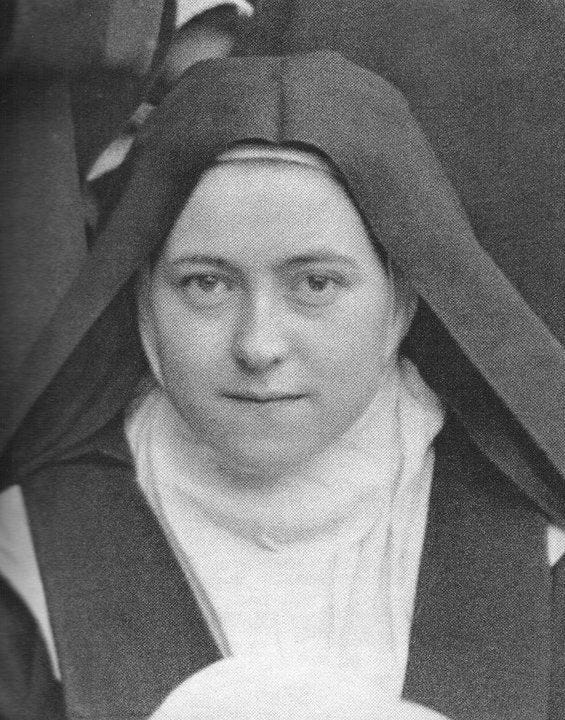
St Thérèse’s Story of a Soul is a witness-talk offered to the modern mind as a very credible death-bed testimony that Christ is the Bridegroom of every human soul. In The Four Loves, C. S. Lewis explains the specific difference between Eros and Venus, which the modern mind tends to conflate. St John Paul II’s Theology of the Body is a systematic biblical exegesis that summarizes the Christian mystagogy of marriage based on the inherent material differences between male and female. Benedict XVI’s encyclical Deus Caritas Est describes the development of human love toward spiritual maturity under the influence of sacramental grace. Our Lord must be loved and obeyed for himself alone, not for any subjective affirmations or spiritual delights that he happens to give us. Our obedience to Christ must transform our human subjectivity, emotions, affections and desires, but such a transformation must always be proportionate to our true nature and biological identity, either male or female. May the nuptial mystical union of Christ and the Church keep us grounded in reality and teach us the spiritual significance of our natural human powers.
About Deacon Tracy Jamison, OCDS, PhD
Deacon Tracy Jamison was raised in a Christian family as the son of a Scotch-Irish evangelical minister in the Campbellite tradition. As an undergraduate he majored in Biblical and Ancient Near Eastern Studies at Cincinnati Christian University, where his parents had been educated. At this institution he met Joyce, who was completing a degree in Church Music, and after graduation they entered the covenant of Christian marriage in 1988. Through the study of philosophy and the writings of the Early Church Fathers, Tracy was received into the full communion of the Catholic Church in 1992. Under the influence of the theological writings of St. John Paul II he began to study the works of St. Teresa of Avila and St. John of the Cross and entered formation as a Secular Carmelite of the Teresian Reform. In 1999 he completed the doctoral program in Philosophy at the University of Cincinnati, and in 2002 he made his definitive profession as a Secular Carmelite. In 2010 he was ordained as a permanent deacon of the Archdiocese of Cincinnati. Currently he is a professor of philosophy at Mount St. Mary’s Seminary of the West.
© 2026, Lawain McNeil, Mission Surrender, LLC.
Laura Ercolino, Hope's Garden" has The Brides of Christ **Self-paced Study, & a Men's of Christ group, It's been Life-Changing & Soo Healing, Encountering The Bridegroom's LOVE for me!♥️ Hope you can check it out, on her website, Hopes Garden, Brides of Christ, God Bless!