


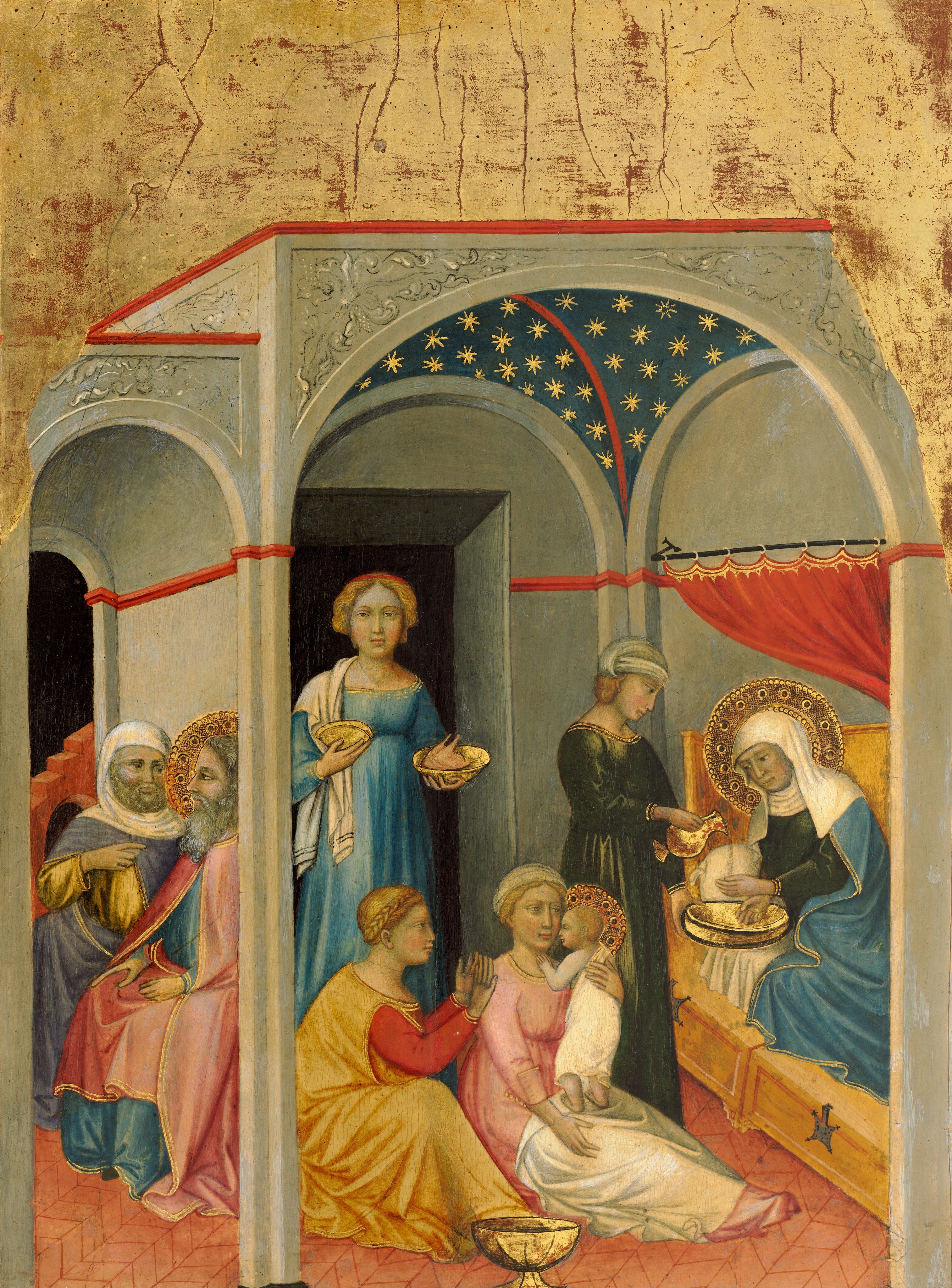
This is an excerpt of a homily given by Benedict XVI on Sept 7, 2008 at the Shrine of Our Lady of Bonaria
It is the Lord’s Day, but - given this special circumstance - the Liturgy of the Word has proposed to us the Readings for the celebrations dedicated to the Blessed Virgin. These are in particular texts planned for the Feast of the Birth of Mary which for centuries has been fixed on 8 September, the date of the consecration of the basilica built in Jerusalem above the house of St Anne, Mother of Our Lady. They are Readings which effectively always contain the reference to the mystery of her birth. First of all there is the Prophet Micah’s marvelous oracle concerning Bethlehem, in which the birth of the Messiah is announced. The Messiah, the oracle says, was to be a descendant of King David, like him a native of Bethlehem but a figure who would exceed human limitations: his “origin”, it says, are “from ancient times”, lost in the most remote ages, at the frontier of eternity. His greatness would reach “to the ends of the earth”, as would also be his peace (cf. Mi 5,1-4). The coming of the “Lord’s anointed”, who was to mark the beginning of the people’s liberation was described by the Prophet with an enigmatic expression: “until the time when she who is in travail has brought forth” (Mi 5,3). Thus the Liturgy - which is a privileged school of the faith - teaches us to see in Mary’s birth a direct connection with that of the Messiah, Son of David.
The Gospel, a passage from the Apostle Matthew, proposed to us precisely the account of Jesus’ birth. However, the Evangelist introduces it with a summary of his genealogy, which he sets at the beginning as a prologue. Here too the full evidence of Mary’s role in salvation history stands out: Mary’s being is totally relative to Christ and in particular to his Incarnation. “Jacob the father of Joseph the husband of Mary, of whom Jesus was born, who is called Christ” (Mt 1,16). The lack of continuity in the layout of the genealogy immediately meets the eye; we do not read “begot” but instead: “Mary, of whom Jesus was born who is called Christ”. Precisely in this we perceive the beauty of the plan of God who, respecting the human being, makes him fertile from within, causing the most beautiful fruit of his creative and redeeming work to develop in the humble Virgin of Nazareth. Then the Evangelist brings on stage the figure of Joseph, his inner drama, his robust faith and his exemplary rectitude. Behind Joseph’s thoughts and deliberations is his love for God and his firm determination to obey him. But how is it possible not to feel that Joseph’s distress, hence his prayers and his decision, were motivated at the same time by esteem and love for his betrothed? God’s beauty and that of Mary are inseparable in Joseph’s heart; he knows that there can be no contradiction between them; he seeks the answer in God and finds it in the light of the Word and of the Holy Spirit: “The Virgin shall be with child and give birth to a son, and they shall call him Emmanuel (which means, God with us)” (Mt 1,23 cf. Is 7,14).
Thus, once again, we can contemplate Mary’s place in the saving plan of God, that “purpose” which we find in the Second Reading, taken from the Letter to the Romans. Here the Apostle Paul expresses in two verses, unusually dense with meaning, the synthesis of what human life is from a meta-historical viewpoint: a parabola of salvation that starts from God and returns to him; a parabola entirely motivated and governed by his love. This is a salvific design totally permeated by divine freedom, which nonetheless awaits a fundamental contribution by human freedom: the creature’s corresponds to the Creator’s love. And it is here, in this space of human freedom, that we perceive the presence of the Virgin Mary, without her ever having been explicitly mentioned: she is in fact, in Christ, the first fruits and model of “those who love him [God]” (Rm 8,28). The predestination of Mary is inscribed in the predestination of Jesus, as likewise is that of every human person. The “here I am” of the Mother faithfully echoes the “here I am” of the Son (cf. He 10,6), as does the “here I am” of all adoptive children in the Son, that of us all, precisely.
[We] are called to be integrated in the spiritual “genealogy” of the Gospel. Christianity did not arrive […] with the swords of conquerors or by foreign imposition but germinated from the blood of the martyrs who gave their life […] as an act of love for God and for men and women.
I well know that Mary is in your hearts. A hundred years later, let us thank her today for her protection and renew our trust in her, recognizing her as the “Star of the New Evangelization” at whose school we may learn how to bring Christ the Savior to the men and women of our time.
May Mary help you to bring Christ to families, little domestic churches and cells of society, which today more than ever are in need of both spiritual and social trust and support. May she help you to find appropriate pastoral strategies to ensure that Christ is encountered by young people who by their nature bring new dynamism but often fall prey to the widespread nihilism, thirsting for truth and ideals precisely when they seem to deny them. May she render you capable of evangelizing the world of work, the economy and politics which need a new generation of committed lay Christians who can seek competently and with moral rigour sustainable solutions of development. In all these aspects of Christian commitment you can always count on the guidance and support of the Blessed Virgin. Let us therefore entrust ourselves to her maternal intercession.
Mary is the harbor, refuge and protection for [those] who have within them the strength of oak. When the storm has passed the oak stands strong; fires rage and it sends out new shoots; the drought comes and it wins through once again. Let us therefore renew joyfully our consecration to such a caring Mother. […]May Mary Queen of Peace and Star of Hope intercede for us. Amen!
© 2026, Lawain McNeil, Mission Surrender, LLC.