


The meritorious act of faith in the word of God is a supernatural act of the human person appropriating a divine grace infused into the human intellect and will. By nature it is impossible for any human person to make this act, but by grace a human person receives the temporary or habitual capacity to recognize and believe the word of God. The supernatural act of faith in the word of God can be partially understood by means of its similarity to the natural act of faith in the word of a credible human person. This analogy is very helpful for understanding the essential elements of a fully supernatural habit of faith. Supernatural faith is the infused form of virtue that is necessary for salvation and for an abiding union with God (Avery Cardinal Dulles, The Assurance of Things Hoped For: A Theology of Christian Faith, New York: Oxford University Press, 1994, pp. 274-277).
Whenever this virtue is infused by God into a human intellect, and the person then exercises the virtue, it begins to undergo a gradual development in accord with its own nature and the person’s disposition. Depending on the condition of the soul in which it is infused, the virtue of faith either lives or dies. If it is exercised sufficiently to remain a living presence, its powers can then be actualized at will. The person’s exercise of faith is always initially immature, but under the right conditions the virtue of faith will grow in the soul, gradually become mature and explicit, and thus begin to bear fruit (Dulles, pp. 278-281).
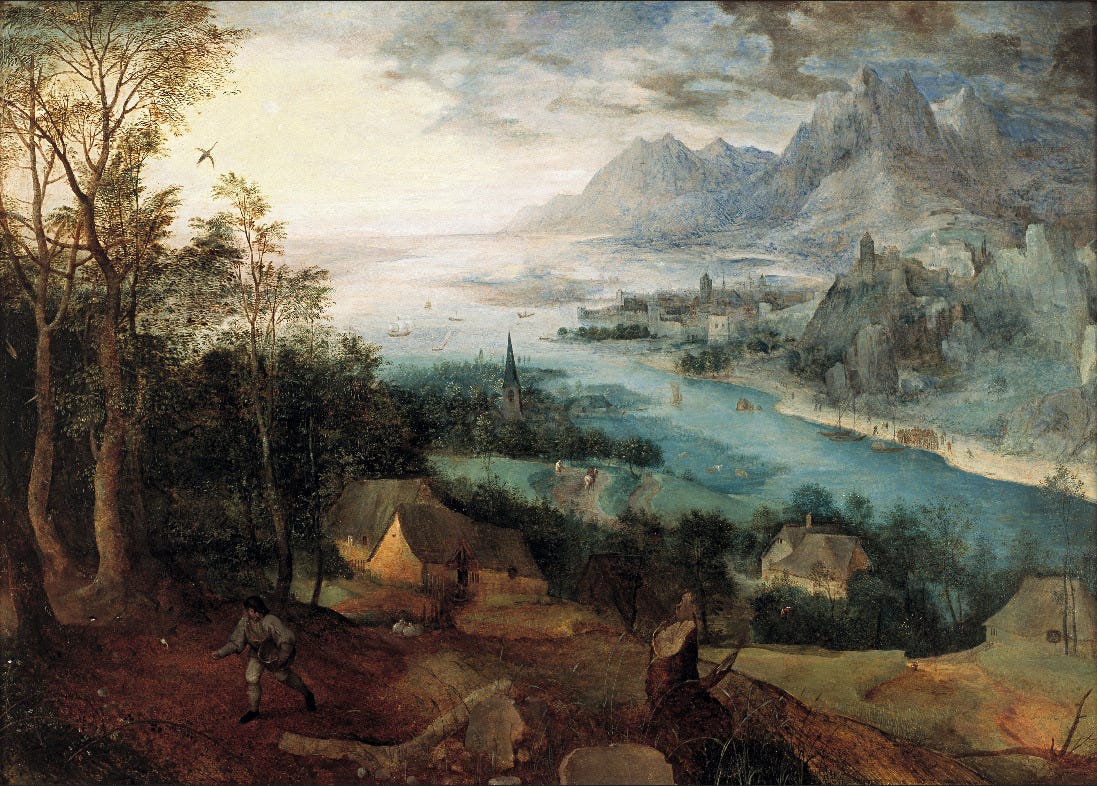
Our Lord Jesus Christ taught us these perennial spiritual truths very concretely and effectively in the form of parables, especially in the parable of the sower (Matthew 13; Mark 4; Luke 8). Seed that falls on the hard path cannot penetrate the soil, and therefore it is immediately lost. Seed that falls on rocky ground does not take firm root, and therefore it lasts only for a short while. Seed that falls among the thorns takes firm root and grows, but it is choked by the thorns that grow up with it and therefore does not bear fruit. But seed that falls on fertile and pure soil takes firm root and is able to produce an abundant harvest, in some thirtyfold, in others sixtyfold, and in others even a hundredfold. The seed is the word of God. The soil is the human heart. Whoever has ears ought to hear.
A mature act of supernatural faith in the word of God necessarily involves an explicit assent to propositions which originate in God’s knowledge and communication. In any act of faith, we charitably take someone’s word for something and assent to truths which are credible but not evident. Just as a natural, human act of faith involves an assent to propositions, so also a supernatural, graced act of faith involves an assent to propositions. A basic assumption of the various faith traditions is that the virtue of faith is a reasonable but mediated form of knowledge which can be either human or divine. Natural, human faith is the rational acceptance of a human testimony. Supernatural, graced faith is the rational acceptance of a divine testimony. Supernatural faith, like human faith, is essentially a matter of believing a credible testimony and becoming certain that some particular propositions are in fact true. These propositional truths can be formulated as articles of faith and expressed in the form of a creed (Fernando Ocáriz and Arturo Blanco, Fundamental Theology, Revised Edition, Woodridge, IL: Midwest Theological Forum, 2009, pp. 116-129).
Firm faith involves the acceptance of propositions on the basis of the credible word of those witnesses who are in a position to know that those propositions are true. Every human person is an authority in the sense of being in a position to know and bear witness to certain truths. And some persons are authorities in the sense of having specific knowledge that transcends general human experience. The objective basis for faith is the authority of the witnesses, not immediate evidence or rational inference, although evidence and reason are always required to judge the credibility of the witnesses. In the act of faith, the “evidence” is the testimony of witnesses about matters not directly known to those who are attempting to form a conviction. This seems to be the meaning of the description offered in Hebrews 11:1. Such evidence is like that which is used for judgment in a court of law or in historical research. It is “evidence that demands a verdict,” as many evangelical Christians put it.
In order for the virtue of faith to exist in a human soul, a credible testimony must be formulated and offered and then received and believed. The testimony normally consists of propositional truths, which are expressed in terms that can be understood. There must be a credible witness, or a group of credible witnesses, who asserts that the propositions are true. There must also be a person, or a group of persons, who hears the propositions, understands what is being asserted by the credible witnesses, and then believes that the propositions are true (Ocáriz and Blanco, pp. 136-141).
Faith is a common and natural mode of knowledge, a human mode of knowledge which can be elevated by grace to a participation in God’s revealed knowledge. As a natural human act, faith resides in the intellect, and it is always reasonable. Faith is thus an intellectual virtue, but the act of assent is virtuous only insofar as the testimony received and believed is actually credible. If the act is not reasonable, then it is not an act of faith, but an act of credulity. True faith is never gullible, but it is also never based on direct evidence or rational inference. Faith is a form of knowledge based not on our own personal experience but on the knowledge possessed by some other person whom we know to be trustworthy. Faith is a mediated form of knowledge, a kind of participation in someone else’s knowledge, and in any act of faith there is always a mediator (Ocáriz and Blanco, pp. 361-371).
Faith can be supernatural only if there has been a divine revelation of God’s knowledge. Divine revelation is in fact fundamental to human existence. As Moses and our Lord Jesus Christ put it, “We do not live by bread alone, but by every word that comes forth from the mouth of God” (Deuteronomy 8:3; Matthew 4:4). God exists, and he has not been silent. His existence can be known either by reason or by faith. In every word that God speaks to the human heart he reveals at the very least that he exists. From the very beginning of human existence he has been revealing himself to human persons in human terms and actively seeking to cultivate a personal relationship with them.
Christians believe that divine revelation was fulfilled and completed in the divine Person of Jesus Christ. The inspired author of Hebrews puts it this way, “In many and various ways God spoke of old to our fathers by the prophets, but in these last days he has spoken to us by a Son” (Hebrews 1:1-2). Christians in general have always recognized that Christ left his Apostles a deposit of divinely revealed truth and commissioned them to preserve that deposit, interpret it, and transmit it to the whole world.
Christians often disagree, however, in their understanding of the specific means by which Christ intended that deposit of divine truth to be preserved, interpreted, and transmitted. The Catholic understanding has always been that that the content of divinely revealed truth is perpetually preserved and transmitted by the Church through Sacred Tradition and Sacred Scripture. A key element in the Catholic understanding of the Church is that the Church as a whole is an instrument through which Christ infallibly preserves and transmits the truth that he wants people to know for their happiness and salvation. Christ himself is a divine Person and is absolutely infallible as such. The Church possesses a participated infallibility by virtue of her mystical union with Christ. The Church’s participated infallibility pertains specifically to faith and morals. And the Church’s infallibility is part of her divinely revealed doctrine (Ocáriz and Blanco, pp. 58-61).
The Catholic view has also always maintained that the original Apostles received from Christ a special teaching authority in the Church, a teaching authority which has come to be called the “magisterium” of the Church. This special teaching authority is believed to have been transmitted by the Apostles to their successors, the bishops whom they ordained in apostolic succession. The infallibility of the Catholic Church, then, is understood as an organic relation between the beliefs of the faithful as a whole, the doctrines of the bishops who are ordained in apostolic succession, and the assertions of the inspired authors of Sacred Scripture. The faithful as a whole are infallible in believing the deposit of divinely revealed truth, and the bishops as a whole are infallible in teaching the deposit of divinely revealed truth (Ocáriz and Blanco, pp. 61-66).
Of course, individual members of the faithful are often mistaken in some of their beliefs, and individual bishops or groups of bishops do occasionally fall into error in some of their teachings. But the Catholic view is that the Church as a whole participates in the infallibility of Christ, and that it does so in accord with the conditions and the content that Christ has specified for the use of this gift. In accord with those conditions and that content, the bishops as a whole have the apostolic power to teach the deposit of divine truth infallibly whenever they are united in judgment with the bishop of Rome. The bishop of Rome possesses this apostolic power preeminently, but even he is limited to teaching infallibly only under certain conditions, and only with respect to divinely revealed truth and natural moral law (Ocáriz and Blanco, pp. 58-61).
A Catholic Christian should be a model of conscious and explicit assent to all Catholic dogmas and principles of faith and morals, even in the face of personal sacrifice, public ridicule, or martyrdom, as has been required of many of the faithful in every age. When the heart of a Christian is fertile and pure, the word of God that is sowed in it will not fail to take root firmly, mature fully, and produce an abundant harvest, perhaps thirtyfold, or sixtyfold, or even a hundredfold.
In many parts of the world, including the United States, vast numbers of people who received a fully Christian initiation in their youth are no longer practicing the Christian faith and now have a personal act of faith which is either incomplete, immature, unconscious, merely implicit, or even dead. Whenever supernatural faith dies in the heart of a society that was formerly Christian, the sentiment that typically takes its place is one that is consciously anti-Christian. One good thing that God often brings out of this kind of unhappy development is a greater doctrinal and pastoral unity among Christians in general. Through faithful Christian witness, hearts and societies can always be re-cultivated and re-planted with the word of God wherever it has been lost, uprooted, or neglected. May the Lord of the Harvest send many more faithful servants into his fields.
About Deacon Tracy Jamison, OCDS, PhD
Deacon Tracy Jamison was raised in a Christian family as the son of a Scotch-Irish evangelical minister in the Campbellite tradition. As an undergraduate he majored in Biblical and Ancient Near Eastern Studies at Cincinnati Christian University, where his parents had been educated. At this institution he met Joyce, who was completing a degree in Church Music, and after graduation they entered the covenant of Christian marriage in 1988. Through the study of philosophy and the writings of the Early Church Fathers, Tracy was received into the full communion of the Catholic Church in 1992. Under the influence of the theological writings of St. John Paul II he began to study the works of St. Teresa of Avila and St. John of the Cross and entered formation as a Secular Carmelite of the Teresian Reform. In 1999 he completed the doctoral program in Philosophy at the University of Cincinnati, and in 2002 he made his definitive profession as a Secular Carmelite. In 2010 he was ordained as a permanent deacon of the Archdiocese of Cincinnati. Currently he is an associate professor of philosophy at Mount St. Mary’s Seminary of the West.
© 2026, Lawain McNeil, Mission Surrender, LLC.
Thank YOU, LORD, for my Christian parents and my Christian grade school St. John Lutheran.
Especially appreciate these lines: “Faith is thus an intellectual virtue … a mediated form of knowledge, a kind of participation in someone else’s knowledge, and in any act of faith there is always a mediator.”